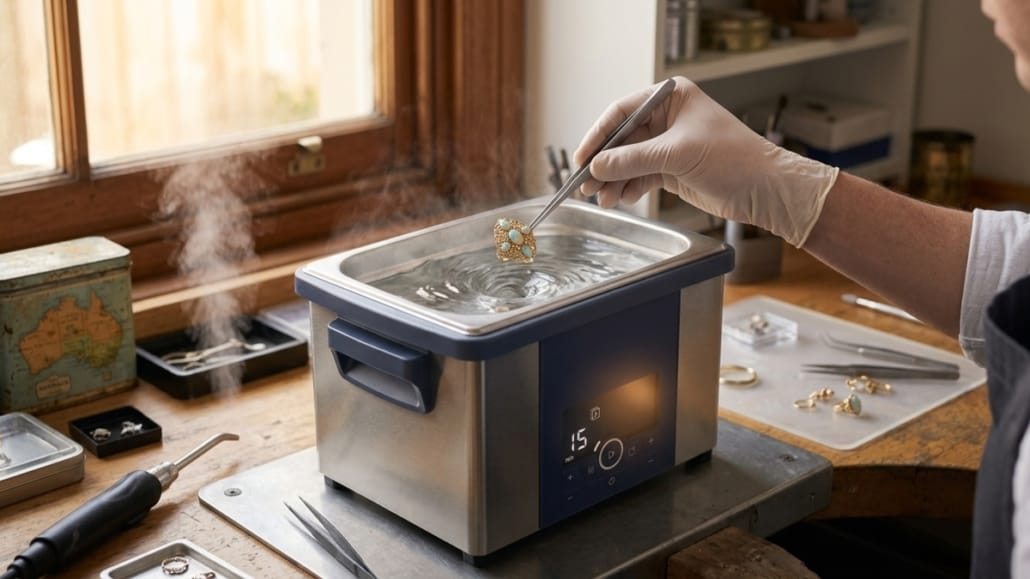
Ultrasonic Jewellery Cleaning: How to Clean Jewellery Like a Professional
Ultrasonic cleaning is how jewellers, watchmakers and retailers bring the sparkle back to rings, chains and gemstones — reaching behind settings and into detail that a cloth or brush simply can’t. Elma has supplied the trade in Australia for decades, and the process is just as effective in a workshop as it is on a retail counter.
This guide covers how it works, the right solution and machine to use, a step-by-step, and — importantly — what you should never put in the bath.
Why ultrasonic is the jeweller’s choice
An ultrasonic cleaner works by cavitation — microscopic bubbles imploding throughout the solution, lifting grime, skin oils, hand cream and polishing residue from every surface, including under stones and inside settings. (See how ultrasonic cleaning works.) The result is a deep clean in minutes, with no scrubbing and no scratching.
It’s used two ways in the trade:
– Retail & service — restoring customers’ rings, chains and watches to showroom condition.
– Manufacturing & repair — removing polishing compound, rouge and lapping paste from freshly worked pieces.
The right solution makes the difference
Plain water under-performs. Match the concentrate to the job:
- Elma Super Clean — a mild, ammoniated concentrate made specifically to clean and brighten gold, silver and hard-stone jewellery. Use at 3–10% in water; a 1-litre bottle goes a long way. The go-to for retail and general jewellery cleaning.
- Tec Clean A2 — alkaline, ideal for removing grinding and polishing compounds, lapping media and grease from precious and non-ferrous metals. The choice for manufacturing and the polishing bench.
Our ultrasonic cleaning solutions guide covers the full range and dilutions.
Choosing a machine
For jewellery, a smaller heated bench unit is usually ideal — and a higher ultrasonic frequency cleans delicate pieces more gently:
- Elmasonic EASY series — well-built, heated entry-level units; a sensible choice for a retail counter or small workshop.
- P series (multi-frequency) — offers an 80 kHz mode that’s quieter and gentler for fine, delicate jewellery, plus 37 kHz for heavier cleaning.
- A Sweep mode helps clean evenly, and heating speeds up the result.
Browse the full ultrasonic cleaner range or use our guide to choosing a cleaner to match capacity to your volume.
How to clean jewellery — step by step
- Fill the tank with warm water and the correct dose of Super Clean (typically 3–10%).
- Degas a fresh solution for a couple of minutes so cavitation is at full strength.
- Load pieces into the insert basket — never directly on the tank floor, and don’t overcrowd.
- Run a short cycle (often 3–10 minutes depending on soiling).
- Rinse in clean water and dry with a soft, lint-free cloth — or finish with a steam cleaner for a flawless result.
- Inspect settings before and after, especially on older or repaired pieces.
For a professional finish, many jewellers pair ultrasonic cleaning with an Elma steam cleaner to blast away loosened residue and water spots.
What NOT to put in the bath
This matters: some stones and settings are damaged by ultrasonics. Keep opals, pearls, coral, emeralds, turquoise and other soft or treated stones out, along with glued settings, fragile antiques and thinly plated pieces. Our full guide on what not to put in an ultrasonic cleaner has the complete list — read it before cleaning customer pieces.
For jewellery businesses
If you run a retail store, repair workshop or manufacturing bench, the right ultrasonic-and-steam setup pays for itself quickly in time saved and finish quality. Elma equipment is German-made and built for daily professional use. Contact our Australian team and we’ll match a cleaner and solution to your work — or browse Super Clean and the ultrasonic cleaner range to get started.


